Tuesday, February 16, 2010

Sunday, February 14, 2010

S.Palin: Chiromancy Basics For Beginners


There are three basic aspects of the human hand: (1) the palm; (2) the finger; (3) the thumb. The flat middle part of the hand is the called the palm. That is where most chiromancy or palm-reading is done. Attached to the palm are two types of appendages: (1) the thumb (2) the finger. Most human hands have one thumb and four fingers. [See Illustration] Many authorities, however, also consider the thumb a type of finger. They then say that the hand has five fingers. They do not mean by this that most people have five fingers and one thumb. They mean that the human hand is comprised of five fingers including one thumb. There is additionally a large thick appendage extending from the palm opposite the fingers. This is called the wrist. The wrist plays no appreciable role in chiromancy or palm-reading besides serving as a platform from which to hang the hand....

S. Palin, Chiromancy Basics For Beginners, Vol. I, Ch. 13, p.147.
________________________________________________________

[copyright EAC 2010]

Saturday, February 13, 2010

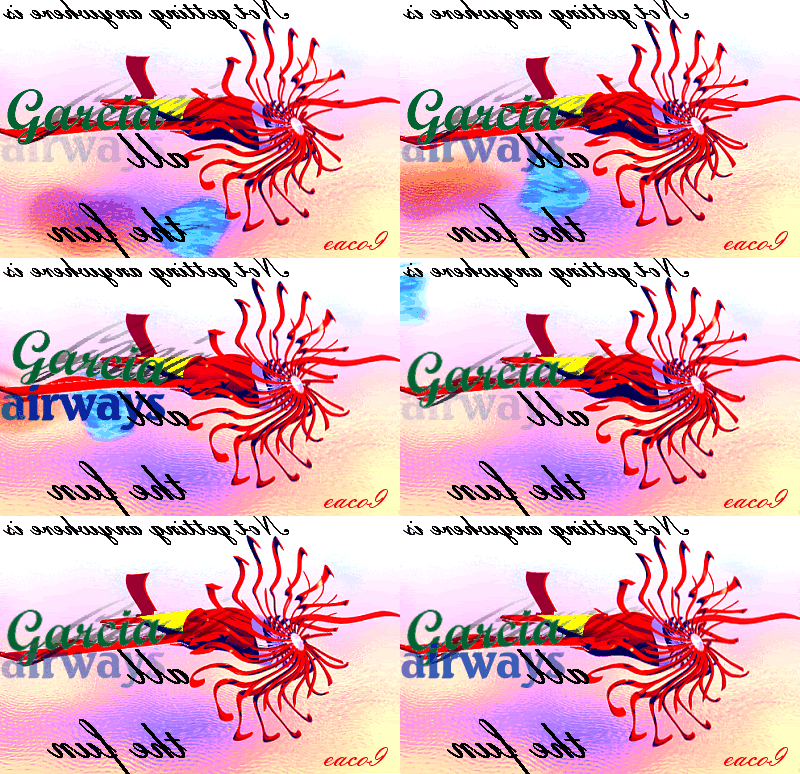
Una Carta De Garcia (Uno, Dos, Tres...Cha Cha Cha)


"Garcia Airways--where not getting there is half the fun."
______________________________________________________
Click on middle image to view full size

Tuesday, February 9, 2010

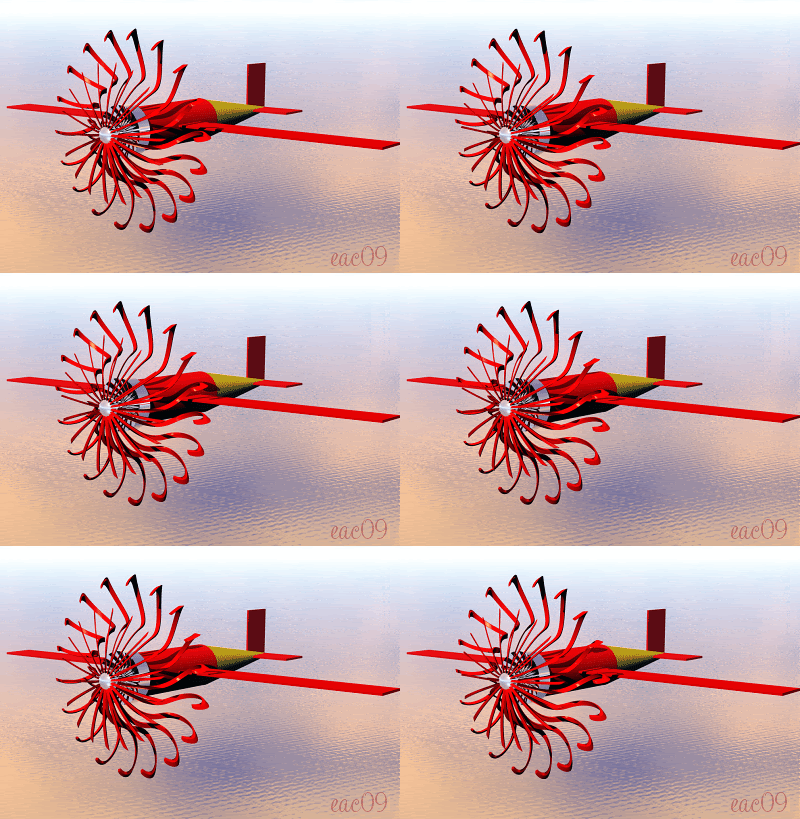
Pez En El Viento


Anduve como vosotros escarbando
la estrella interminable,
y en mi red, en la noche, me desperte desnudo,
unica presa, pez encerrado en el viento.


[Pablo Neruda]

I went around just like you
scrutinizing the limitless star
and in my net in the night
waking me up naked one catch:
a fish corraled in the wind.

[tr. EAC 2010]

Fille à plomb


Fille à plomb


Little poem en point
is the slender lady palm:
is she not pretty?

[copyright EAC 2010]
____________________________________________________
Click on image to view at full size

Sunday, February 7, 2010

N__ing And K___ing


If one considers k___ing a process toward definition and completion, k___ing self directly and in the specious present is an illusion.

If there is any genuine import to being self-aware, therefore, it is distinct from k___ing self.

In eastern religion and philosophy, which are essentially the same, the futility of any final k___ing self is a commonplace, so much so that in the West it is easily overlooked as the keystone of all that follows.

The eye cannot see it self.

If k___ing is seeing, therefore, one can never k___ self.

What is true of k___ing is true of n__ing.

[copyright EAC 2010]